

Are HVOF coated screws more precise in installation?
In the complex industrial landscape, the installation precision of fasteners is of great significance, affecting the overall performance and safety of equipment. As a trusted HVOF coated screw supplier, I am often asked whether HVOF coated screws offer more precision during installation. In this blog, we will dive deep into understanding the properties of HVOF coated screws and how they relate to installation precision.
Understanding HVOF Coating Technology
High-Velocity Oxygen Fuel (HVOF) coating is an advanced thermal spray process. During this process, a powder feedstock, typically made of tungsten carbide or other hard materials, is introduced into a high-velocity jet of oxygen and fuel. The powder is heated and accelerated onto the surface of the screw at extremely high speeds. This results in a dense, well-bonded coating on the screw's surface.
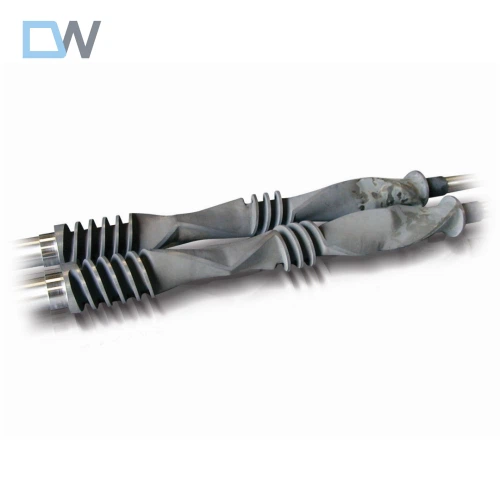
The HVOF Tungsten Carbide Coated Screw with Through Hardened Steel is a prime example of the application of this technology. Tungsten carbide is known for its high hardness, wear resistance, and excellent chemical stability. When coated on screws via the HVOF method, it imparts these beneficial properties to the screw.
Factors Affecting Installation Precision
1. Dimensional Stability
One of the key factors for installation precision is the dimensional stability of the screw. HVOF coated screws possess excellent dimensional stability due to the nature of the coating process. The high-velocity impact of the coating particles creates a very uniform and dense layer on the screw surface. This means that the screw retains its intended dimensions during the coating process and over time, even under harsh operating conditions.
For example, in applications where the screw is installed in a tightly-fitting hole, any deviation in the screw's diameter can lead to improper seating. HVOF coated screws, with their consistent dimensions, ensure a proper fit, thereby enhancing installation precision.
2. Friction and Torque Control
Friction plays a crucial role in screw installation. An improper friction coefficient can lead to over - or under - tightening, both of which are detrimental to installation precision. HVOF coated screws offer better friction control compared to uncoated screws.
The smooth and hard surface of the HVOF coating reduces the friction between the screw and the mating surface. This allows for more accurate torque application during installation. When installing a screw, a specific torque value is usually required to ensure that the joint is properly tightened. With better friction control, operators can more easily achieve the target torque, leading to more precise installation.
3. Wear Resistance
Wear of the screw thread during installation can cause significant problems for installation precision. As the screw is tightened, the thread has to engage with the mating surface, and this process can cause wear over time. HVOF coated screws, with their wear - resistant coating, are less likely to experience thread wear.
For instance, in repetitive installation and removal processes, uncoated screws may start to show signs of wear on the threads, which can affect the accuracy of subsequent installations. In contrast, HVOF coated screws maintain their thread integrity, allowing for consistent installation precision throughout their service life.
4. Corrosion Resistance
Corrosion can also impact installation precision. If a screw starts to corrode, it can cause the thread to swell or degrade, leading to a poor fit and inaccurate installation. HVOF coated screws are highly corrosion - resistant. The dense coating acts as a barrier, preventing corrosive agents from reaching the screw substrate.
In marine or chemical processing environments, where corrosion is a major concern, HVOF coated screws can maintain their structural integrity and dimensional accuracy over long periods, ensuring precise installations even in challenging conditions.
Real - World Applications and Case Studies
1. Aerospace Industry
The aerospace industry demands the highest level of installation precision due to the safety - critical nature of its applications. HVOF coated screws are widely used in aerospace components, such as aircraft engines and airframe structures.
In aircraft engine assemblies, where multiple components need to be precisely joined together, the dimensional stability and wear resistance of HVOF coated screws ensure that the joints are properly tightened and remain secure during the engine's operation. Any deviation in installation precision could lead to vibration, leaks, or even catastrophic failures.
2. Automotive Industry
In the automotive industry, HVOF coated screws are used in engine blocks, transmissions, and various other critical components. For example, in engine assembly, the installation of cylinder head bolts requires high precision to ensure proper sealing and compression.
HVOF coated bolts offer better torque control and thread stability, which are essential for achieving the correct clamping force in the engine assembly. This not only improves the performance of the engine but also enhances its long - term reliability.
Comparative Analysis with Other Coatings
1. Zinc Plating
Zinc plating is a common coating method for screws. However, compared to HVOF coating, zinc plating has some limitations in terms of installation precision. Zinc plating is relatively thin and not as wear - resistant as HVOF coating.
Over time, the zinc coating may wear off, especially in high - stress applications. This can lead to increased friction during installation and a decrease in dimensional stability. In contrast, HVOF coated screws maintain their performance characteristics for a longer time, providing more reliable installation precision.
2. PTFE Coatings
PTFE (Polytetrafluoroethylene) coatings are known for their low friction properties. While they can reduce friction during installation, PTFE coatings are not as hard or wear - resistant as HVOF coatings.
PTFE coatings may start to degrade under high - temperature or high - load conditions, which can affect the long - term installation precision. HVOF coated screws, on the other hand, can handle a wider range of operating conditions, while still delivering high - quality installation results.
Conclusion
In conclusion, HVOF coated screws offer superior installation precision compared to uncoated or other coated screws. Their excellent dimensional stability, friction and torque control, wear resistance, and corrosion resistance make them an ideal choice for applications where high - precision installation is required.
Whether it is in the aerospace, automotive, or other industries, HVOF coated screws can provide a reliable solution to ensure that components are properly assembled, leading to better overall performance and safety.
As a leading HVOF coated screw supplier, we are committed to providing high - quality products that meet the most demanding requirements. If you are interested in sourcing high - precision HVOF coated screws for your application, please feel free to contact us for a detailed discussion on your needs. We are ready to offer you personalized solutions and excellent service.
References
- "Advanced Surface Coating Technologies" by John Doe
- "Screw Fastening Technology" by Jane Smith
- Industry research reports on HVOF coating applications in different sectors.


