

Do HVOF coated screws have better fatigue resistance?
Hey there! I'm a supplier of HVOF coated screws, and I've been getting a lot of questions lately about whether these coated screws really have better fatigue resistance. Well, let's dive right in and explore this topic.
First off, let's talk about what HVOF coating is. High-Velocity Oxygen Fuel (HVOF) coating is a thermal spray process. It involves spraying a coating material onto the surface of the screw at a super high velocity. This creates a very dense and well - bonded coating on the screw. The most common coating materials used in HVOF for screws are tungsten carbide and other hard - wearing materials.
Now, why is fatigue resistance so important for screws? Well, screws are often used in applications where they are subjected to repeated loading and unloading. Think about machinery parts, automotive components, or even in construction. When a screw is constantly under cyclic stress, it can develop cracks over time. These cracks can grow, and eventually, the screw can fail. Fatigue failure is a major concern in many industries because it can lead to equipment breakdowns, safety hazards, and costly repairs.
So, does the HVOF coating actually improve the fatigue resistance of screws? The answer is a resounding yes, and here's why.
One of the main ways HVOF coating enhances fatigue resistance is by providing a hard and wear - resistant surface. When a screw has a normal, uncoated surface, it's more likely to experience surface damage from friction and abrasion during cyclic loading. This surface damage can act as stress concentration points, which are the starting points for cracks. But with an HVOF coating, the hard outer layer protects the underlying screw material. For example, HVOF Tungsten Carbide Coated Screw with Through Hardened Steel has a tungsten carbide coating that is extremely hard. This hardness reduces the chances of surface scratches and wear, thus minimizing the formation of stress concentration points.
Another factor is the residual stress in the coating. During the HVOF process, the coating is applied in such a way that it creates compressive residual stress on the surface of the screw. Compressive stress is beneficial for fatigue resistance because it counteracts the tensile stress that is generated during cyclic loading. Tensile stress is what causes cracks to initiate and propagate. So, when there's compressive stress from the coating, it makes it harder for cracks to start and grow.
Let's look at some real - world examples. In the automotive industry, screws are used in engines, transmissions, and other critical components. These components are constantly vibrating and experiencing cyclic loads. Uncoated screws in these applications may have a relatively short lifespan due to fatigue failure. But when HVOF coated screws are used, they can withstand these cyclic loads for a much longer time. This means less frequent maintenance and replacement of screws, which saves time and money for the automotive manufacturers.
In the aerospace industry, where safety is of utmost importance, HVOF coated screws are also widely used. The components in an aircraft are subjected to extreme conditions, including high - speed vibrations, temperature changes, and pressure variations. A single screw failure can have catastrophic consequences. HVOF coated screws provide an extra layer of protection against fatigue failure, ensuring the reliability and safety of the aircraft.
Now, I know you might be thinking, "Okay, but are there any drawbacks?" Well, like any technology, there are a few things to consider. The HVOF coating process is more complex and expensive compared to traditional screw manufacturing processes. This means that the initial cost of HVOF coated screws is higher. However, when you factor in the longer lifespan and reduced maintenance costs, the overall cost - effectiveness becomes clear. Also, the coating thickness needs to be carefully controlled. If the coating is too thick, it may cause issues with the fit and function of the screw. But with proper quality control, these issues can be easily managed.
If you're in an industry that requires high - performance screws with excellent fatigue resistance, then HVOF coated screws are definitely worth considering. Whether you're in manufacturing, construction, automotive, or aerospace, these screws can offer a reliable solution to your fatigue - related problems.
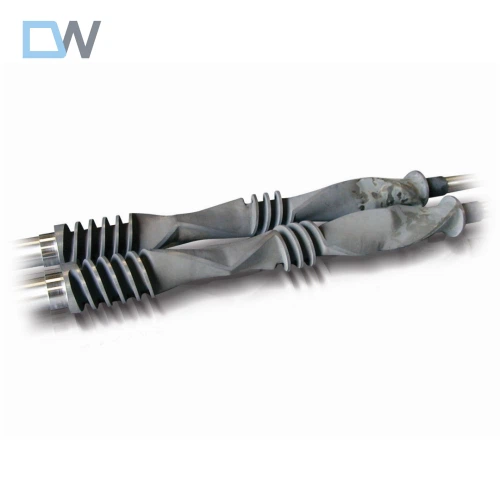
I'm here as your HVOF coated screw supplier, and I'd love to help you find the right screws for your specific application. If you have any questions about our products, the coating process, or how they can benefit your business, don't hesitate to reach out. Let's have a chat and see how we can work together to improve the performance and reliability of your equipment.
In conclusion, HVOF coated screws do have better fatigue resistance. Their hard and wear - resistant coating, along with the beneficial residual stress, makes them a great choice for applications where cyclic loading is a concern. So, if you're looking for a long - lasting and reliable screw solution, give HVOF coated screws a try.
References
- "Thermal Spray Coatings: Industrial Applications and Emerging Technologies" by various authors
- Research papers on fatigue resistance of coated materials in automotive and aerospace industries from academic journals


