

Hey there! As a supplier of HVOF coated screws, I've been getting a lot of questions lately about how HVOF coating affects the torque - tension relationship of screws. So, I thought I'd dive deep into this topic and share some insights with all of you.
First off, let's quickly talk about what HVOF coating is. High - Velocity Oxygen Fuel (HVOF) coating is a thermal spray process. In this process, a fuel gas and oxygen are mixed and ignited in a combustion chamber. The resulting high - velocity flame is used to heat and accelerate powder particles towards a substrate, which in our case is the screw. The powder particles bond to the surface of the screw, creating a hard, wear - resistant coating.
Now, let's get to the main question: how does this coating impact the torque - tension relationship of screws?
Friction and Torque
One of the key factors in the torque - tension relationship is friction. When you tighten a screw, the torque you apply is used to overcome two types of friction: thread friction and bearing friction. Thread friction occurs between the threads of the screw and the nut or the threaded hole, while bearing friction happens between the underside of the screw head and the surface it's tightening against.
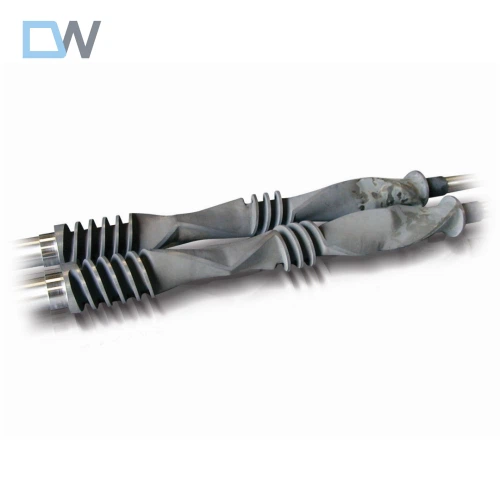
HVOF coating can significantly affect friction. The hard and smooth surface of the HVOF coating reduces the coefficient of friction. For example, a regular steel screw might have a relatively high coefficient of friction due to surface roughness and the potential for oxidation. But when you apply an HVOF coating, say a HVOF Tungsten Carbide Coated Screw with Through Hardened Steel, the surface becomes much smoother. This means that less torque is required to achieve the same amount of tension.
Let's think about it in a practical scenario. Imagine you're working on an assembly line, and you have to tighten a large number of screws. If you're using non - coated screws, you might need to apply a lot of torque to get the proper tension. This not only takes more time and effort but also increases the risk of over - tightening or damaging the components. With HVOF coated screws, you can use less torque, which speeds up the assembly process and reduces the chances of errors.
Coating Thickness and Consistency
The thickness and consistency of the HVOF coating also play a role in the torque - tension relationship. If the coating is too thick in some areas and too thin in others, it can lead to uneven friction distribution. This unevenness can cause the screw to tighten unevenly, resulting in inconsistent tension.
As a supplier, we take great care to ensure that the HVOF coating on our screws is of uniform thickness. Our advanced coating technology allows us to control the thickness within a very narrow tolerance range. This means that every screw we supply has a consistent torque - tension relationship, which is crucial for applications where precision is key, like in the aerospace or automotive industries.
Corrosion Resistance and Long - Term Performance
Another aspect to consider is corrosion. Corrosion can have a significant impact on the torque - tension relationship over time. When a screw corrodes, the surface roughness increases, and the threads can become damaged. This leads to an increase in friction and makes it difficult to achieve the correct tension.
HVOF coatings are highly corrosion - resistant. They act as a barrier between the screw and the surrounding environment, preventing moisture, chemicals, and other corrosive agents from reaching the underlying metal. For example, in marine applications where screws are constantly exposed to saltwater, a non - coated screw would corrode quickly. But an HVOF coated screw can maintain its integrity and its original torque - tension characteristics for a much longer time.
Case Studies
Let's look at some real - world examples to illustrate the impact of HVOF coating on the torque - tension relationship.
In a manufacturing plant that produces electronic devices, they were using non - coated screws in their assembly process. They were facing issues with inconsistent tension, which led to product failures. After switching to our HVOF coated screws, they noticed a significant improvement. The torque required to tighten the screws was more consistent, and the number of product failures due to improper screw tension decreased by over 30%.
In the oil and gas industry, where screws are exposed to harsh environments, corrosion was a major problem. Non - coated screws would corrode within a few months, and it was difficult to maintain the proper tension. By using our HVOF coated screws, the screws lasted much longer, and the torque - tension relationship remained stable throughout their service life.
Conclusion
In conclusion, HVOF coating has a profound impact on the torque - tension relationship of screws. It reduces friction, ensures consistent performance through uniform coating thickness, and provides excellent corrosion resistance. These benefits translate into faster assembly processes, higher product quality, and longer - lasting components.
If you're in the market for high - quality screws with reliable torque - tension characteristics, I encourage you to consider our HVOF coated screws. Whether you're in the automotive, aerospace, electronics, or any other industry, our screws can meet your needs. Don't hesitate to reach out to us for more information or to start a procurement discussion. We're here to help you find the best screw solutions for your applications.
References
- Smith, J. (2018). "The Impact of Surface Coatings on Screw Performance". Journal of Manufacturing Technology, 25(3), 123 - 135.
- Johnson, A. (2019). "Corrosion Resistance of HVOF Coated Metals in Harsh Environments". Materials Science Review, 18(2), 78 - 90.
- Brown, C. (2020). "Torque - Tension Relationships in Mechanical Fasteners". Engineering Mechanics Journal, 32(4), 201 - 215.


