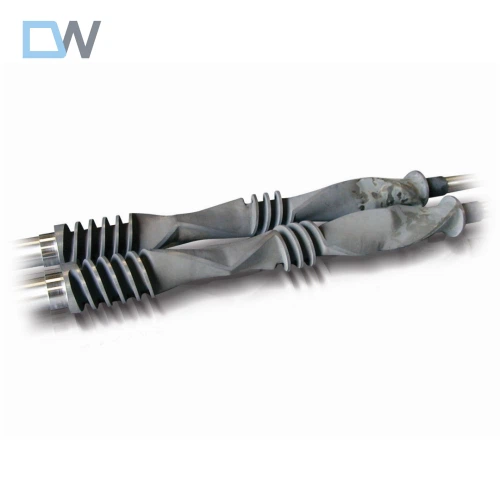
When it comes to high - performance screws in various industrial applications, the cost factor plays a crucial role in the decision - making process for manufacturers and end - users alike. As a supplier of HVOF coated screws, I am well - versed in the pricing dynamics of these specialized components and how they stack up against other high - performance screw alternatives.
Understanding HVOF Coated Screws
HVOF, or High - Velocity Oxygen Fuel, is a thermal spray coating process that involves the combustion of oxygen and a fuel gas to create a high - velocity jet. This jet is used to melt and propel coating materials onto a substrate, such as a screw. In our case, we offer HVOF Tungsten Carbide Coated Screw with Through Hardened Steel. Tungsten carbide is a popular coating material due to its exceptional hardness, wear resistance, and corrosion resistance.
The HVOF coating process adds a new dimension of performance to the screws. It enhances the surface properties of the screw, making it more durable and suitable for harsh operating conditions. For example, in plastic injection molding, the HVOF coated screws can withstand the high - pressure and high - temperature environment, as well as the abrasive nature of some plastic materials.
Cost Components of HVOF Coated Screws
The cost of HVOF coated screws is composed of several factors. First, there is the cost of the base screw material. We typically use through - hardened steel, which is a high - quality material that provides a strong foundation for the coating. The price of this steel is subject to market fluctuations in the steel industry, influenced by factors such as raw material availability, production costs, and global demand.
Second, the HVOF coating process itself is expensive. It requires specialized equipment, skilled labor, and high - purity coating materials. The cost of operating the HVOF equipment includes the consumption of fuel gases, oxygen, and electricity. Moreover, the labor cost is significant as trained technicians are needed to ensure the proper application of the coating. The quality control during the coating process also adds to the overall cost. Multiple layers of coating may be applied, and each layer needs to be inspected for thickness, adhesion, and hardness.
Third, there are post - coating processes such as machining and finishing. After the coating is applied, the screw may need to be machined to achieve the desired dimensions and surface finish. This additional processing step further increases the cost.
Comparison with Other High - Performance Screws
Hardened Screws
Hardened screws are a common type of high - performance screw. The hardening process usually involves heat treatment to increase the hardness of the screw. The cost of hardened screws is generally lower than that of HVOF coated screws. The heat treatment process is relatively simple and less capital - intensive compared to the HVOF coating process.
However, in terms of performance, hardened screws may not be as resistant to wear and corrosion as HVOF coated screws. In applications where the screw is exposed to highly abrasive materials or corrosive environments, the hardened screws may experience premature wear and require more frequent replacement. This can lead to higher long - term costs, despite the lower initial purchase price.
Stainless Steel Screws
Stainless steel screws are known for their corrosion resistance. The raw material cost of stainless steel is relatively high, but the manufacturing process is more straightforward compared to HVOF coated screws. Stainless steel screws can be produced in large quantities, which helps to reduce the per - unit cost.
Nonetheless, the hardness and wear resistance of stainless steel screws are not as high as those of HVOF coated screws. In applications with high - friction and high - wear requirements, such as in metal stamping or some types of machining, stainless steel screws may not be able to maintain their performance over a long period. As a result, the need for replacement and the associated downtime can offset the initial cost savings.
Titanium Screws
Titanium is a high - performance material known for its high strength - to - weight ratio and excellent corrosion resistance. Titanium screws are often used in aerospace and medical applications. The cost of titanium screws is very high due to the high price of titanium raw materials and the complex manufacturing processes involved.
Compared to HVOF coated screws, titanium screws may have a cost advantage in applications where weight is a critical factor. However, in most industrial applications where weight is not the primary concern, the high cost of titanium may not be justified. HVOF coated screws can provide similar levels of performance in terms of wear and corrosion resistance at a relatively lower cost.
Long - Term Cost Analysis
When comparing the cost of HVOF coated screws with other high - performance screws, it is essential to consider the long - term cost. The long - term cost includes not only the purchase price but also the cost of maintenance, replacement, and downtime.
HVOF coated screws, despite their higher initial cost, can offer significant cost savings in the long run. Their excellent wear and corrosion resistance mean that they have a longer service life. This reduces the frequency of replacement, saving on the cost of new screws. Additionally, the reduced need for replacement also minimizes downtime, which can be a significant cost factor in industrial operations.
For example, in a plastic injection molding plant, using HVOF coated screws can result in fewer production interruptions due to screw wear. This leads to increased productivity and lower overall production costs.
Applications and Cost - Performance Trade - offs
Different applications have different requirements in terms of performance and cost. In some industries, such as the automotive industry, where high - volume production is the norm, cost is a critical factor. Manufacturers may be more inclined to use less expensive high - performance screws such as hardened or stainless steel screws, even though they may not have the same level of performance as HVOF coated screws.
On the other hand, in industries where the quality of the final product is of utmost importance, such as the aerospace or medical device industries, the performance of the screws is a top priority. In these cases, the higher cost of HVOF coated screws may be justified as they can ensure the reliability and durability of the products.
Conclusion and Call to Action
In conclusion, the cost of HVOF coated screws is higher than that of some other high - performance screws in terms of initial purchase price. However, when considering the long - term cost, including maintenance, replacement, and downtime, HVOF coated screws can offer excellent value for money. Their superior wear and corrosion resistance make them a great choice for harsh operating conditions.
If you are in the market for high - performance screws and want to explore the benefits of HVOF coated screws for your specific application, we encourage you to reach out to us. We have extensive experience in supplying HVOF coated screws and can provide you with detailed information on product specifications, pricing, and after - sales service. Contact us today to start a discussion about your screw requirements and see how our HVOF coated screws can meet and exceed your expectations.
References
-ASM Handbook, Volume 5: Surface Engineering.
-Metal Powder Industries Federation (MPIF) Technical Report on Thermal Spray Coatings.
-Polymer Processing Society Journal: Papers related to the use of high - performance screws in plastic injection molding.