

Hey there! As a supplier of HVOF coated screws, I often get asked about how to test the corrosion resistance of these bad boys. Well, you've come to the right place. In this blog, I'm going to break down the process step by step, so you can have a better understanding of how to ensure the quality of our HVOF coated screws.
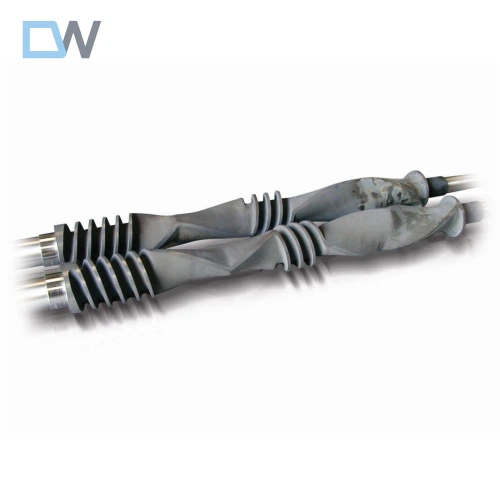
First off, let's talk a bit about what HVOF coated screws are. HVOF stands for High-Velocity Oxygen Fuel, and it's a thermal spray coating process. This process involves spraying a coating material onto the surface of the screw at a super high velocity, creating a dense and well-bonded coating. The most common coating material used is tungsten carbide, which offers excellent wear and corrosion resistance. If you're interested in our HVOF Tungsten Carbide Coated Screw with Through Hardened Steel, click the link to learn more.
Now, let's dive into the testing methods. There are several ways to test the corrosion resistance of HVOF coated screws, and I'll cover the most common ones here.
Salt Spray Test
The salt spray test, also known as the salt fog test, is one of the most widely used methods for evaluating the corrosion resistance of coated materials. It's a relatively simple and cost-effective test that can give you a good indication of how well the coating will perform in a corrosive environment.
Here's how it works:
- Prepare the samples: You'll need to select a representative sample of the HVOF coated screws. Make sure the screws are clean and free of any contaminants before testing.
- Set up the salt spray chamber: The chamber is filled with a salt solution, usually a 5% sodium chloride solution. The temperature inside the chamber is typically maintained at around 35°C (95°F).
- Place the samples in the chamber: Hang the screws in the chamber so that they are exposed to the salt spray. The samples should be arranged in a way that ensures uniform exposure to the spray.
- Run the test: The screws are left in the chamber for a specified period of time, usually 24, 48, 72, or more hours, depending on the requirements. During the test, the salt spray continuously deposits on the surface of the screws, simulating a corrosive environment.
- Evaluate the results: After the test is complete, remove the screws from the chamber and carefully examine them for signs of corrosion. Look for any rust, blistering, or coating delamination. The amount of corrosion and the time it takes for it to appear can give you an idea of the coating's corrosion resistance.
One of the advantages of the salt spray test is that it's a standardized test method, which means the results can be easily compared between different samples and coatings. However, it's important to note that the salt spray test is an accelerated test, and the results may not accurately reflect the long-term performance of the coating in real-world conditions.
Electrochemical Impedance Spectroscopy (EIS)
Electrochemical Impedance Spectroscopy, or EIS, is a more advanced method for testing the corrosion resistance of coated materials. It measures the electrical impedance of the coating and the underlying metal, which can provide information about the coating's integrity and the corrosion rate.
Here's a brief overview of how EIS works:
- Prepare the samples: Similar to the salt spray test, you'll need to select a representative sample of the HVOF coated screws and clean them thoroughly.
- Set up the EIS equipment: The EIS equipment consists of a potentiostat, a reference electrode, and a working electrode. The working electrode is the HVOF coated screw, and the reference electrode is used to measure the potential difference between the working electrode and the electrolyte.
- Immerse the samples in an electrolyte: The screws are immersed in an electrolyte solution, such as a sodium chloride solution. The electrolyte provides a conductive medium for the electrochemical reactions to occur.
- Apply an alternating current: An alternating current is applied to the working electrode, and the resulting impedance is measured at different frequencies. The impedance data is then analyzed to determine the coating's resistance to corrosion.
- Interpret the results: The EIS data can be used to calculate the coating resistance, the charge transfer resistance, and the double-layer capacitance. These parameters can provide information about the coating's barrier properties, the presence of defects in the coating, and the corrosion rate of the underlying metal.
EIS is a more sensitive and accurate method than the salt spray test, as it can detect early stages of corrosion and provide detailed information about the coating's performance. However, it requires specialized equipment and expertise, and the test results can be more difficult to interpret.
Immersion Test
The immersion test is another simple and straightforward method for testing the corrosion resistance of HVOF coated screws. It involves immersing the screws in a corrosive solution for a specified period of time and then evaluating the results.
Here's how it's done:
- Prepare the samples: Select a representative sample of the HVOF coated screws and clean them.
- Choose a corrosive solution: The choice of corrosive solution depends on the intended application of the screws. Common solutions include saltwater, acid solutions, and alkaline solutions.
- Immerse the samples: Place the screws in the corrosive solution and make sure they are fully submerged. The temperature and duration of the immersion can vary depending on the requirements.
- Monitor the samples: Periodically check the screws for signs of corrosion. You can also measure the weight loss of the screws to determine the corrosion rate.
- Evaluate the results: After the immersion period is over, remove the screws from the solution and examine them for corrosion. Compare the results with the requirements to determine if the coating meets the specifications.
The immersion test is a practical method for evaluating the corrosion resistance of coated screws in real-world conditions. However, it can be time-consuming, and the results may be affected by factors such as the temperature, the concentration of the corrosive solution, and the presence of other contaminants.
Conclusion
Testing the corrosion resistance of HVOF coated screws is an important step in ensuring the quality and performance of these products. By using methods such as the salt spray test, EIS, and the immersion test, you can get a better understanding of how well the coating will protect the screws from corrosion.
As a supplier of HVOF coated screws, we take quality control very seriously. We use a combination of these testing methods to ensure that our screws meet the highest standards of corrosion resistance. If you're in the market for high-quality HVOF coated screws, we'd love to hear from you. Whether you're looking for HVOF Tungsten Carbide Coated Screw with Through Hardened Steel or other types of coated screws, we can provide you with the products and services you need. Contact us today to discuss your requirements and let's start a conversation about how we can help you with your project.
References
- ASTM B117 - Standard Practice for Operating Salt Spray (Fog) Apparatus
- ISO 16773 - Electrochemical Impedance Spectroscopy (EIS) of Painted and Coated Metals
- NACE International - Corrosion Testing and Evaluation: Principles and Applications


