

What is the cost - effectiveness of HVOF coated screws?
In the highly competitive manufacturing industry, the pursuit of cost - effectiveness is a constant goal for businesses. As a supplier of HVOF (High - Velocity Oxygen Fuel) coated screws, I've witnessed firsthand the significant impact these specialized components can have on both the performance and cost - efficiency of various industrial processes. In this blog post, I'll delve into the concept of cost - effectiveness of HVOF coated screws, exploring their benefits, applications, and how they stack up against traditional alternatives.
Understanding HVOF Coating Technology
Before we discuss the cost - effectiveness, it's essential to understand what HVOF coating is. HVOF is a thermal spray process that involves the combustion of oxygen and a fuel gas in a combustion chamber. The resulting high - velocity jet is used to heat and accelerate powder particles onto a substrate, forming a dense and well - bonded coating. When applied to screws, this coating typically consists of materials like tungsten carbide, which provides excellent hardness, wear resistance, and corrosion protection.
Benefits of HVOF Coated Screws
Enhanced Wear Resistance
One of the primary advantages of HVOF coated screws is their superior wear resistance. In applications where screws are subjected to high levels of friction, abrasion, or contact with abrasive materials, the HVOF coating acts as a protective barrier. For example, in injection molding machines, screws are constantly in contact with molten plastic, which can cause significant wear over time. HVOF coated screws can withstand this wear much better than uncoated or conventionally coated screws. This means that they have a longer service life, reducing the frequency of screw replacements.
Corrosion Protection
In addition to wear resistance, HVOF coatings offer excellent corrosion protection. In industries such as chemical processing or marine applications, screws are often exposed to corrosive substances. The HVOF coating prevents the underlying screw material from coming into contact with these corrosive agents, thereby extending the screw's lifespan. This is particularly important as corrosion can not only damage the screw but also lead to contamination of the product being processed.
Improved Process Efficiency
HVOF coated screws can also contribute to improved process efficiency. Their smooth and hard surface reduces the friction between the screw and the surrounding material. In injection molding, this results in more consistent plastic flow, better mixing, and reduced energy consumption. As a result, manufacturers can produce higher - quality products at a faster rate, leading to increased productivity and potentially lower production costs.
Applications of HVOF Coated Screws
Injection Molding
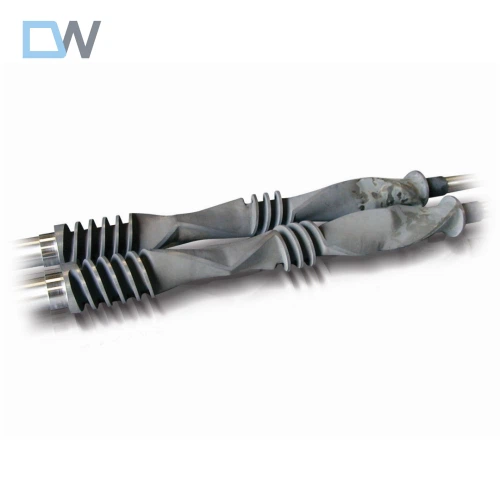
As mentioned earlier, injection molding is one of the most common applications for HVOF coated screws. In this process, the screw is responsible for melting, mixing, and injecting the plastic into the mold. The high - wear environment and the need for precise control make HVOF coated screws an ideal choice. They can maintain their performance over a long period, ensuring consistent product quality and reducing downtime for screw replacement. You can learn more about our HVOF Tungsten Carbide Coated Screw with Through Hardened Steel which is specifically designed for injection molding applications.
Extrusion
Extrusion is another industry where HVOF coated screws are widely used. In plastic extrusion, the screw transports the plastic through the extruder, shaping it into the desired form. The wear and tear on the screw in this process can be substantial, especially when processing abrasive or filled plastics. HVOF coated screws can handle these challenging conditions, providing reliable performance and longer service life.
Chemical Processing
In chemical processing plants, screws are used in various equipment such as reactors and mixers. These screws are exposed to corrosive chemicals, high temperatures, and abrasive materials. HVOF coated screws offer the necessary protection against corrosion and wear, ensuring the safe and efficient operation of the equipment.
Cost - Effectiveness Analysis
Initial Investment vs. Long - Term Savings
It's true that HVOF coated screws generally have a higher initial cost compared to uncoated or conventionally coated screws. However, when considering the long - term savings, the cost - effectiveness becomes evident. The extended service life of HVOF coated screws means fewer replacements, which reduces the cost of purchasing new screws over time. Additionally, the improved process efficiency can lead to lower energy consumption and higher production output, further offsetting the initial investment.
Reduced Downtime
Downtime is a significant cost factor in manufacturing. When a screw fails, the entire production line may need to be shut down for replacement. This not only results in lost production time but also incurs additional costs for labor and maintenance. HVOF coated screws' longer service life reduces the frequency of these shutdowns, minimizing the impact on production schedules and overall costs.
Quality and Yield Improvement
The use of HVOF coated screws can also lead to improved product quality and higher yields. In injection molding and extrusion, the consistent performance of the coated screws ensures that products meet the required specifications more consistently. This reduces the number of defective products, which in turn saves on material costs and rework expenses.
Comparison with Traditional Alternatives
Uncoated Screws
Uncoated screws are the most basic option, but they have significant limitations. They are prone to rapid wear and corrosion, especially in harsh environments. This means that they need to be replaced frequently, resulting in higher long - term costs. In contrast, HVOF coated screws offer superior performance and durability, making them a more cost - effective choice in the long run.
Conventional Coatings
Conventional coatings such as chrome plating or nitriding also provide some level of wear and corrosion resistance. However, they may not be as effective as HVOF coatings in extreme conditions. HVOF coatings have a higher hardness and better bonding strength, which allows them to withstand more severe wear and corrosion. As a result, HVOF coated screws can outperform conventionally coated screws in terms of service life and cost - effectiveness.
Conclusion
In conclusion, the cost - effectiveness of HVOF coated screws is undeniable. While they may require a higher initial investment, their long - term benefits in terms of extended service life, reduced downtime, improved process efficiency, and better product quality far outweigh the upfront costs. Whether you're in the injection molding, extrusion, or chemical processing industry, HVOF coated screws can help you optimize your production processes and reduce your overall costs.
If you're interested in learning more about our HVOF coated screws or would like to discuss your specific requirements, I encourage you to reach out to us. We're committed to providing high - quality products and excellent customer service, and we look forward to the opportunity to work with you to find the best solution for your business.
References
- "Thermal Spray Coatings: Industrial Applications and Emerging Markets" by John V. Wood
- "Injection Molding Handbook" by O. Olszewski
- "Extrusion of Polymers: Theory and Practice" by John A. Brydson


