

Hey there! As a supplier of HVOF coated screws, I'm stoked to share some insights about the standard specification of these bad - ass screws.
First off, let's talk about what HVOF actually is. HVOF stands for High - Velocity Oxygen Fuel. It's a thermal spray process that's pretty amazing. In this process, a fuel gas and oxygen are mixed and ignited in a combustion chamber. The resulting high - velocity flame is used to heat and accelerate powder particles onto the surface of the screw. This creates a super - tough and wear - resistant coating that can really up the game for the screw's performance.
Material of the Base Screw
The base material of an HVOF coated screw is crucial. Usually, through - hardened steel is a top choice. Through - hardened steel has consistent hardness throughout its cross - section. This means that the screw can withstand high pressures and loads without deforming easily. For example, in injection molding applications, where the screw has to push molten plastic through the barrel at high pressures, a through - hardened steel base provides the necessary strength.
The type of through - hardened steel can vary. Some common ones include tool steels like H13. H13 tool steel is known for its excellent toughness, heat resistance, and wear resistance. It can handle the high - temperature and high - pressure environment in injection molding machines. If you're interested in an HVOF Tungsten Carbide Coated Screw with Through Hardened Steel, you can check out HVOF Tungsten Carbide Coated Screw with Through Hardened Steel.
Coating Material
The coating material is where the real magic happens. Tungsten carbide is one of the most popular choices for HVOF coated screws. Tungsten carbide is extremely hard and has excellent wear resistance. It can resist abrasion from the plastic pellets, glass fibers, or other fillers that are often mixed with the plastic in the injection molding process.
Another great thing about tungsten carbide is its chemical stability. It can withstand the corrosive effects of some plastics, especially those with high - acid or high - alkaline content. This means that the screw will last longer and maintain its performance over time.
There are also different grades of tungsten carbide. The choice of grade depends on the specific application. For example, if the screw is going to be used in a highly abrasive environment, a higher - grade tungsten carbide with a higher percentage of tungsten and a tougher binder might be needed.
Coating Thickness
The thickness of the HVOF coating is a key specification. Generally, the coating thickness for HVOF coated screws ranges from 0.1mm to 0.5mm. A thinner coating, say around 0.1mm, might be sufficient for applications with relatively low abrasion and corrosion requirements. It also allows for a more precise fit of the screw in the barrel.
On the other hand, a thicker coating, up to 0.5mm, is better for applications where the screw is exposed to severe wear and tear. For instance, in the processing of plastics with a high content of glass fibers, the thicker coating can provide better protection and extend the screw's service life.
Surface Finish
The surface finish of the HVOF coated screw is also important. A smooth surface finish reduces friction between the screw and the plastic melt. This not only improves the flow of the plastic but also reduces the energy consumption of the injection molding machine.
The surface roughness of an HVOF coated screw is typically measured in micrometers. A good surface finish for an HVOF coated screw would have a surface roughness (Ra) of less than 1 micrometer. This smooth surface also helps in preventing the build - up of plastic on the screw, which can cause blockages and affect the quality of the molded parts.
Tolerance
Tolerance is a big deal when it comes to HVOF coated screws. The dimensional tolerance of the screw needs to be within a very tight range. For example, the diameter tolerance of the screw might be within ±0.05mm. This tight tolerance ensures that the screw fits perfectly in the barrel of the injection molding machine.
If the screw is too large, it can cause excessive friction and wear on both the screw and the barrel. If it's too small, there might be leakage of the plastic melt, which can lead to poor - quality molded parts.
Hardness
The hardness of the HVOF coated screw is a critical specification. The hardness of the coating is usually measured in Rockwell hardness (HRC) or Vickers hardness (HV). For a tungsten carbide HVOF coating, the hardness can range from 800HV to 1200HV.
This high hardness gives the screw the ability to resist wear from the abrasive materials in the plastic. The base material of the screw also has its own hardness. As mentioned earlier, through - hardened steel like H13 has a hardness of around 48 - 52HRC. The combination of the hard coating and the tough base material makes the HVOF coated screw a reliable choice for various applications.
Bond Strength
The bond strength between the coating and the base material is essential. A strong bond ensures that the coating doesn't peel off during the operation of the screw. The bond strength is usually measured in MPa (megapascals). For a well - applied HVOF coating, the bond strength should be at least 70MPa.
There are several factors that can affect the bond strength, such as the surface preparation of the base material, the spray parameters in the HVOF process, and the compatibility between the coating and the base material. Proper surface preparation, like grit blasting, can increase the surface area of the base material and improve the mechanical interlocking between the coating and the base.
Applications
HVOF coated screws are used in a wide range of industries. The injection molding industry is one of the biggest users. They are used to process all kinds of plastics, from common thermoplastics like polyethylene and polypropylene to engineering plastics like polycarbonate and PEEK.
In the food processing industry, HVOF coated screws can be used in extruders to process food products. The wear - resistant coating ensures that the screw doesn't contaminate the food with metal particles.
The automotive industry also benefits from HVOF coated screws. They are used in the production of plastic parts for cars, such as dashboards, bumpers, and interior trims. The high - performance screws can produce high - quality parts with consistent dimensions.
Why Choose Our HVOF Coated Screws
As a supplier, we take pride in our HVOF coated screws. We use the latest HVOF technology to ensure the best quality coating. Our team of experts carefully selects the base materials and coating materials based on the specific requirements of our customers.
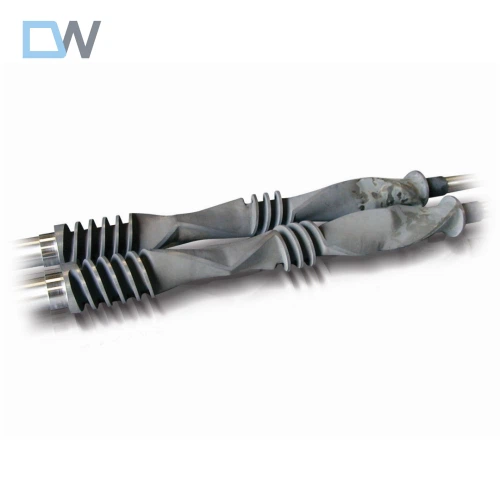
We also have strict quality control measures in place. Every screw goes through a series of tests, including hardness testing, bond strength testing, and dimensional inspection. This ensures that the screws we supply meet the highest standards.
If you're in the market for HVOF coated screws, we'd love to hear from you. Whether you need a standard specification screw or a custom - made one, we can work with you to find the best solution. Just reach out to us, and we can start a discussion about your specific needs. We're here to help you get the most out of your injection molding or other processes with our top - notch HVOF coated screws.
References
-ASM Handbook Volume 5: Surface Engineering. ASM International.
- Thermal Spray Coatings: From Research to Industrial Applications. Springer.
- Injection Molding Handbook. Hanser Publications.


