

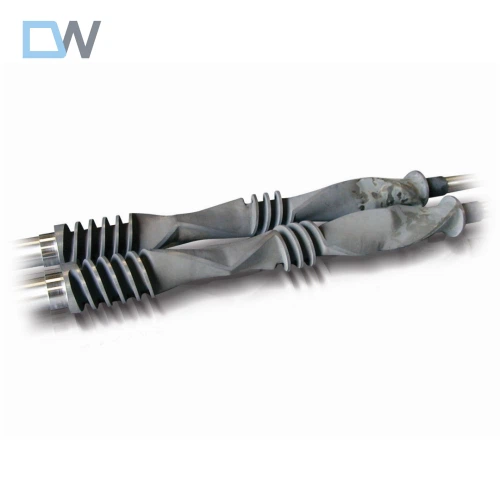
HVOF (High-Velocity Oxygen Fuel) coating is a popular choice for enhancing the performance and durability of screws in various industrial applications. As a supplier of HVOF coated screws, I've encountered numerous challenges faced by our clients, with one of the most common issues being the peeling off of the HVOF coating from the screw surface. In this blog, I'll share some valuable insights and practical solutions on how to prevent this problem, ensuring that our customers get the most out of our HVOF Tungsten Carbide Coated Screw with Through Hardened Steel.
Understanding the Causes of Coating Peeling
Before we delve into prevention strategies, it's crucial to understand why HVOF coatings might peel off the screw. Several factors can contribute to this issue:
1. Surface Preparation
Proper surface preparation is the foundation of a successful HVOF coating. If the screw surface is not thoroughly cleaned and roughened, the coating may not adhere properly. Contaminants such as oil, grease, rust, or dirt can create a barrier between the coating and the substrate, reducing the bond strength.
2. Coating Material and Process
The choice of coating material and the HVOF spraying process parameters play a significant role in coating adhesion. Incompatible coating materials or improper spraying conditions, such as incorrect spray distance, temperature, or powder feed rate, can result in a weak bond between the coating and the screw.
3. Thermal Stress
During the HVOF coating process, the screw is exposed to high temperatures, which can cause thermal stress. If the thermal expansion coefficients of the coating and the substrate are significantly different, the stress generated during cooling can lead to coating delamination.
4. Mechanical Stress
In service, screws are often subjected to mechanical stress, such as torsion, bending, or abrasion. If the coating is not designed to withstand these stresses, it may crack or peel off over time.
Prevention Strategies
Based on the above causes, here are some effective strategies to prevent HVOF coating from peeling off the screw:
1. Optimal Surface Preparation
- Cleaning: Thoroughly clean the screw surface to remove all contaminants. This can be achieved through processes such as degreasing, sandblasting, or chemical cleaning. For example, using a suitable solvent to remove oil and grease, followed by sandblasting to roughen the surface and improve adhesion.
- Roughness Control: The surface roughness of the screw should be carefully controlled to ensure optimal coating adhesion. A rough surface provides more surface area for the coating to bond to, but excessive roughness can also lead to coating defects. Typically, a surface roughness of Ra 3 - 6 µm is recommended for HVOF coatings.
2. Appropriate Coating Material Selection
- Compatibility: Choose a coating material that is compatible with the screw substrate. Consider factors such as the chemical composition, thermal expansion coefficient, and mechanical properties of both the coating and the substrate. For example, tungsten carbide coatings are often used for screws due to their high hardness, wear resistance, and good adhesion to steel substrates.
- Quality Assurance: Source high - quality coating materials from reliable suppliers. Ensure that the coating powder meets the required specifications and has consistent quality to ensure a uniform and strong coating.
3. Precise HVOF Spraying Process
- Parameter Optimization: Optimize the HVOF spraying process parameters, including spray distance, temperature, powder feed rate, and gun traverse speed. These parameters should be carefully adjusted based on the coating material, screw size, and application requirements. For example, a shorter spray distance can increase the kinetic energy of the coating particles, resulting in better adhesion.
- Process Monitoring: Continuously monitor the HVOF spraying process to ensure that the parameters remain within the optimal range. Use advanced monitoring equipment, such as pyrometers and particle velocity sensors, to ensure the quality and consistency of the coating.
4. Thermal Management
- Pre - heating and Post - heating: Pre - heat the screw before the HVOF coating process to reduce the thermal stress during coating deposition. Post - heating the coated screw can also help to relieve residual stress and improve the coating adhesion. However, the pre - heating and post - heating temperatures should be carefully controlled to avoid overheating and damaging the screw or the coating.
- Thermal Barrier Coatings: In some cases, applying a thermal barrier coating between the substrate and the main HVOF coating can help to reduce the thermal stress and improve the coating adhesion. This is especially useful when there is a significant difference in the thermal expansion coefficients between the coating and the substrate.
5. Mechanical Design Considerations
- Stress Relief Features: Incorporate stress relief features into the screw design, such as fillets, chamfers, or grooves, to reduce the concentration of mechanical stress. This can help to prevent the coating from cracking or peeling off under mechanical loads.
- Load Distribution: Ensure that the screw is designed to distribute the mechanical load evenly across the coating surface. Avoid sharp edges or corners that can cause stress concentrations and lead to coating failure.
Quality Control and Testing
In addition to the above prevention strategies, implementing a comprehensive quality control and testing program is essential to ensure the long - term performance of the HVOF coated screws.
1. Coating Thickness Measurement
Regularly measure the coating thickness using non - destructive testing methods, such as ultrasonic thickness gauges or eddy current sensors. Ensure that the coating thickness meets the specified requirements, as an uneven or insufficient coating thickness can affect the coating adhesion and performance.
2. Adhesion Testing
Perform adhesion tests on the coated screws to evaluate the bond strength between the coating and the substrate. Common adhesion testing methods include pull - off tests, scratch tests, and indentation tests. These tests can help to identify any potential adhesion problems early on and take corrective actions.
3. Performance Testing
Conduct performance tests on the coated screws under simulated service conditions to evaluate their wear resistance, corrosion resistance, and mechanical properties. This can help to ensure that the coated screws meet the performance requirements of the specific application.
Conclusion
Preventing HVOF coating from peeling off the screw requires a comprehensive approach that addresses surface preparation, coating material selection, spraying process optimization, thermal management, and mechanical design considerations. By implementing these strategies and conducting rigorous quality control and testing, we can ensure that our HVOF coated screws provide long - lasting performance and reliability.
As a leading supplier of HVOF coated screws, we are committed to providing our customers with high - quality products and technical support. If you are interested in our HVOF Tungsten Carbide Coated Screw with Through Hardened Steel or have any questions about HVOF coating technology, please feel free to contact us for further discussion and procurement negotiation. We look forward to working with you to meet your specific needs.
References
- Smith, J. (2018). High - Velocity Oxygen Fuel (HVOF) Thermal Spray Coatings: Principles, Processes, and Applications. CRC Press.
- Jones, A. (2020). Surface Preparation for Thermal Spray Coatings. ASM International.
- Brown, R. (2019). Thermal Stress Analysis in Coated Components. Elsevier.


